Time to FTD by Payment Method: Cards, APMs, Vouchers, Crypto
The bonus gets the click. The cashier gets the deposit, or does not. Cards, local bank rails, vouchers and crypto each add a different delay between "I want to play" and a first-time deposit you can actually be paid on.
Affiliates argue about bonuses. Players bounce on cashiers. The gap between those two sentences is most of the conversion you think you lost to "the GEO being hard".
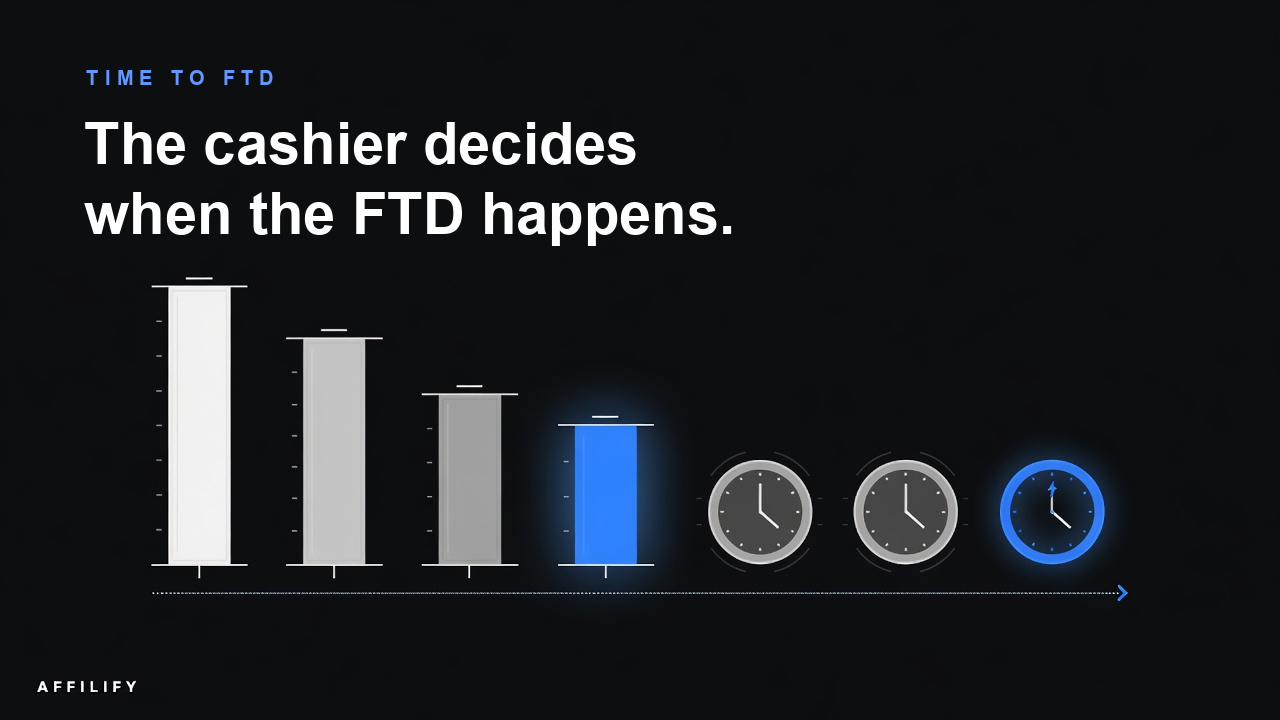
Time to FTD is the minutes (or hours, or a next-day bank transfer) between a registered player who intends to deposit and a first-time deposit the deal will recognise. The landing and the bonus start that clock. The method they are offered finishes it, or does not. Payment methods and FTD conversion is the wider map. This post is the clock.
I am not publishing AFFILIFY conversion rates here. Those numbers, if we share them, belong in ranges that stay true after one brand's cashier changes. What does not change is the order of the methods on the clock, and the way that order should change your landing.
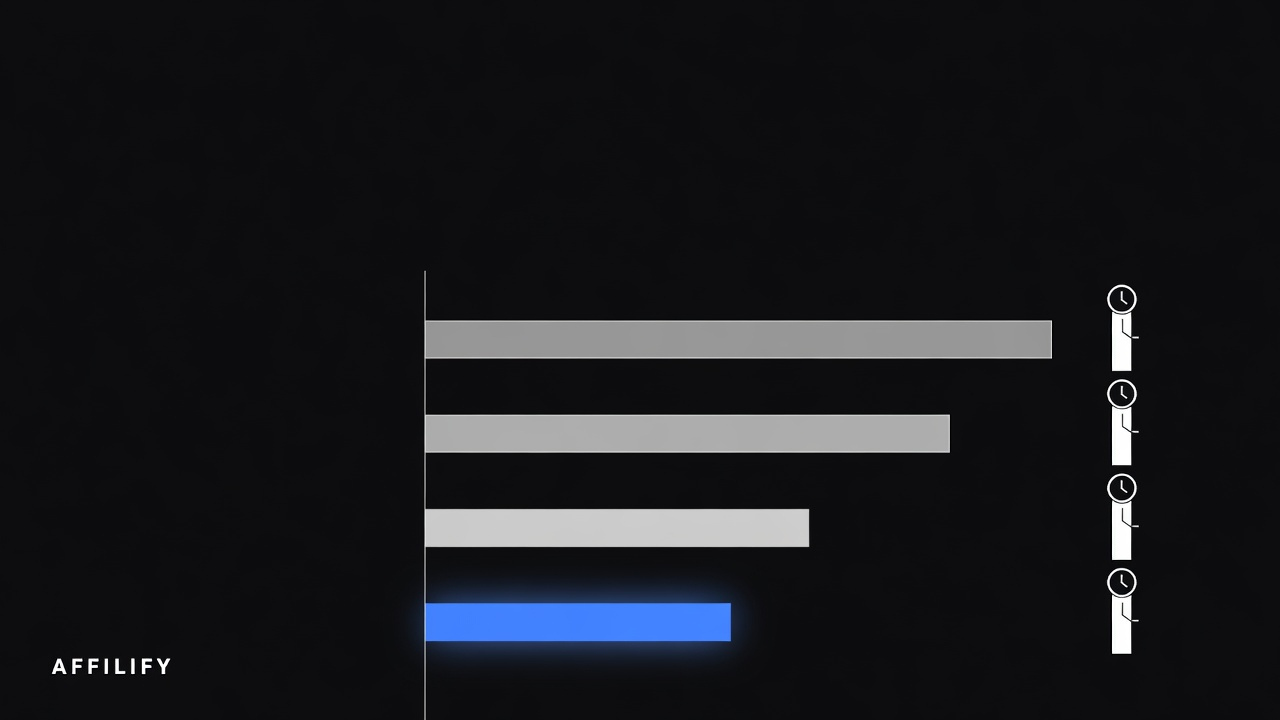
Four clocks, not one
Cards. Still the default on English landings, and still a detour in the markets that have a better rail. The delay is 3-D Secure, a bank app prompt, a card the player does not want to use on a gambling site, a daily limit the bank set without asking. Plenty of FTDs still happen on cards. Plenty of intended FTDs die in the bank app and never come back. If your landing leads with Visa because the screenshot looked familiar, you are designing for yourself.
Local APMs. PIX in Brazil, BLIK and Przelewy24 in Poland, iDEAL in the Netherlands, open banking where it exists. The player pays the way they already pay for everything else. Time to FTD collapses, often to seconds, because there is no new instrument to trust. This is why a Brazilian CPA can look expensive and still be cheap: the rail converts. If the brand's cashier in that GEO does not lead with the local method, the CPA is priced against a funnel the cashier then breaks.
Vouchers. Paysafecard is the one everyone knows. The delay is physical or at least extra: the player has to have the voucher, or go and get one. People who already live on vouchers convert cleanly. People who do not will not go to a kiosk at 23:40 because your review said the welcome offer was strong. Voucher-first cashiers make sense in GEOs where that is how gambling money moves. They are poison as a fallback for a card player.
Crypto. Two clocks hiding under one word. A player who already holds the asset can be fast, sometimes faster than a card. A player who has to buy the asset first is on an on-ramp, a KYC, a transfer, then your cashier. That second player is not a crypto FTD. They are a delayed card FTD with extra steps. On-chain also has a confirmation pause that does not care about kickoff. For in-play traffic, that pause is the whole game.
What this does to the landing
The method list on the landing is not decoration. It is a promise about the cashier. If you advertise PIX and the cashier buries PIX under cards, you paid for a click that now distrusts you. If you advertise a 30-second deposit and the method is a voucher the player has to go and buy, you wrote a lie even if the bonus terms were accurate.
Match the first method on the page to the first method that GEO actually uses. The language map is boring and it works:
- PT / Brazil: PIX, on an SPA-authorised brand
- PL: BLIK, then a local transfer, on a Polish-licensed brand
- DE: open banking, cards, Paysafecard, on a GGL-licensed brand
- NL: iDEAL
- EN-global: do not pretend there is one answer; pick the GEO
A fast cashier does not open a closed market. India banned promoting online money games; Turkey is a state betting monopoly. Do not build a UPI or Turkish-card landing as an acquisition plan for those residents. The method list above is for GEOs you are already allowed to send.
The GEO payout matrix tells you the rate differs by country. This post tells you the cashier is often why the rate had to.
Deep-link to the cashier when the brand lets you, especially on paid and on matchday. A homepage that still wants the player to find "Deposit" is adding a step the clock does not have. Prematch versus in-play is the sportsbook version of the same sentence.
What this does to the deal
A slow cashier inflates CPA in two ways. Fewer intended deposits finish, so you send more clicks per FTD. And the ones that finish later may miss a qualification window: seven days from registration is a common sportsbook clause, and a bank transfer that arrives on day eight is not an FTD, it is a story.
RevShare feels the cashier too, just later. A player who found the deposit painful will find the withdrawal painful, and a player who cannot get paid does not stay. NGR on a book with a slow cashier is not only a bonus problem.
None of this is a reason to pick the brand with the most methods. It is a reason to pick the brand whose first method is the one your GEO already uses, and then to QA the link all the way through a test deposit on that method, on a phone, not through a screenshot of the cashier from 2024.
On AFFILIFY you will not get a faster payout because the player used PIX. Pending still clears on the 15th. KYC still gates the withdrawal. What you will get is the GEO and the timestamp on the FTD, so you can see whether a method that felt fast in the creative was fast in the report. Tag the landing in a sub-id if you are testing two cashiers. Ten slots.
A practical order
- Name the GEO.
- Name the method that GEO actually uses.
- Confirm that method is on the brand's cashier, for that GEO, today.
- Put it on the landing, first, in the same words the cashier uses.
- Test a deposit on a real device.
- Then argue about the bonus.
The bonus still matters. It just does not matter until the money can move.
Frequently asked questions
Which payment method produces the fastest FTD?
The local bank rail, in the GEOs that have one: PIX, BLIK, iDEAL, open banking. Cards are slower than they look because 3-D Secure and bank limits sit in the middle. Vouchers are fast only for people who already hold them. Crypto is fast for people who already hold the asset and slow for everyone who has to buy it first. There is no universal winner, only a winner per GEO. A fast rail in a closed market is still a closed market.
Should I hide methods that convert slowly?
Do not hide a method the player was going to use. Do lead with the one this GEO actually uses, and do not advertise a speed the cashier cannot keep. A card player who wants a card should find a card. They should not have to find it under a PIX banner if they are not in Brazil.
Does a slow deposit still count as an FTD?
If the money arrives and the deal's qualifier is a first-time deposit, yes, even if it took a day. If the deal has a window from registration, a slow method can miss it. Sportsbook deals that want a settled bet inside seven days are unforgiving about this. Read the window before you send traffic that can only pay by bank transfer.
Will AFFILIFY show me time-to-FTD per method?
You get the timestamp on the click and the timestamp on the conversion, plus the GEO. The payment method itself is the operator's event data. If you want to test two cashiers, send them on two landings, tag the landings in sub-ids, and compare time-to-FTD yourself. That test is worth more than a global average.