Inside the Cyprus Company Behind This Platform
AFFILIFY is run by AFFILIFY TECH LTD, a company incorporated in Cyprus. Who builds the tracking, who reviews a promotion, what we publish, what we keep private, and how to check any of it without taking our word for it.
Ask a lot of affiliate platforms who owns them and you get a logo, a support inbox and a vague gesture at the team. That answer survives right up to the first late payout, the first disputed batch, the first month you need a named counterparty instead of a brand voice. AFFILIFY is run by AFFILIFY TECH LTD, a company incorporated in Cyprus. Here is what that buys you, and who actually ships the product.
None of this is interesting while the money moves on time. It becomes the only interesting thing the week it does not.
A company, not a brand name
AFFILIFY TECH LTD is incorporated in Cyprus. The name sits on the terms, on the privacy policy, at the bottom of every email the platform sends, and on the account deletion page nobody reads until they need it. Mail reaches it at info@affilify.partners.
Two things follow from that, and neither is available from a chat handle. There is a jurisdiction, which means Cyprus company law, EU data rules and a public register. There is a contract, because signing up puts you in an agreement with a legal person, and it is the same agreement for the affiliate who arrived yesterday and the one sitting at Diamond.
There is also somewhere for a complaint to land that is not a manager's mood on a Tuesday.
One thing we are not: a gambling operator. AFFILIFY holds no gaming licence, takes no bets and runs no games. It is the tracking and payout layer between affiliates and the brands that do hold those licences. Which GEOs you may send, and under whose licence, stays the brand's rule and the regulator's, never ours. Where affiliates can send iGaming traffic is the long version of that sentence.
That split also decides who you chase when something breaks. A conversion that did not count is a question about the brand's event spec. A balance that will not move is a question for us. Two problems, two counterparties, and affiliates lose weeks sending each one to the wrong place.
What the company is for
Affiliate economics in this industry are mostly private. Rate cards live in chat, the good deal goes to whoever shouts, and a new affiliate learns what a normal CPA looks like by getting a bad one first.
AFFILIFY publishes the part most programs keep quiet. The ladder runs Trial, Bronze, Silver, Gold, Platinum, Diamond. Trial is RevShare only at 25%, and it graduates on ten qualifying deposits inside a rolling 90 days, with nothing carried past that window. Reference casino CPA by tier is $125, $175, $225, $275 and $325. RevShare runs 25 to 45%, floored at 25%. Every promotion is read by a human before it takes effect. Demotions do not wait for anyone. The level system has the detail.
Publishing that costs us a lever. Good.
What stays negotiable is the brand deal on top. The rate that actually pays is set per brand and per GEO, in USD, and it can sit above the reference number. So the ladder is a floor rather than a ceiling, and it is not something a manager can quietly move for a friend.
Who ships the product
A small team, not a department store.
The same engineers write the tracking service, the payout engine, the affiliate dashboard and the two mobile apps. That is deliberate. When the person who wrote the event handler also reads the support ticket about a missing FTD, the fix takes hours instead of a quarter. How AFFILIFY works is that path seen from the outside. The inside is fewer people than you would guess.
Affiliate operations sits next to them: applications, promotion reviews before they take effect, traffic quality, and the half of support chat that is not a password reset.
Compliance is the function whose job is to be unpopular in a growth meeting. Operator agreements, GEO rules, brand terms, and a habit of saying no.
The platform is built in house. It is not a rebadged network wearing our colours, which matters more than it sounds: when a postback spec is wrong, there is nobody upstream to blame and wait for.
The iOS and Android apps carry stats, links, wallet and support chat. Same team, same week, same release notes.
What we publish, and what we will not
Published, because you should be able to plan against it: the ladder and the reference rates, the deal types (RevShare, CPA, CPL, CPR, hybrid), the rule that CPA needs a graduated account and on many brands completed KYC, the fact that one signup reaches every brand while tracking links stay per brand and per GEO, the payout schedule where cleared pending becomes available on the 15th, and the states a balance moves through on the way there. How payouts work covers those states, and why KYC has to be finished before money leaves.
| The question an affiliate actually asks | Where the answer lives |
|---|---|
| What will I be paid for this FTD? | The ladder, then the per brand and per GEO rate printed on the deal |
| When does pending become available? | The 15th, and the wallet shows the state it is in now |
| Why is my withdrawal waiting? | KYC status, in the wallet, before you contact anyone |
| Why did that conversion not count? | The brand's event spec first, support chat if it still does not add up |
| What made my traffic look wrong? | Not published, and that will not change |
Traffic quality is checked continuously, and we do not publish the checklist. That is not coyness. A published checklist becomes a manual, and the people who would study it hardest are the ones you least want studying it.
Two other things stay unpublished: other affiliates' numbers, and any promise about what you will earn. Income here is a function of GEO, brand, source and player quality. Anyone who hands you a figure before you have sent a click is selling something.
How to check us instead of believing us
Do not take a founder's word for a company. Take the five minutes.
- Read the terms and the privacy policy. The legal name and the jurisdiction are in the first paragraph of each, which is where they belong.
- Look the company up on the Cyprus register. It is the only item on this list we cannot influence.
- Install the app before you have money in it, and read the wallet states while they are all zero. A payout system you first meet on payout day is a bad first meeting.
- Finish KYC early, run one small campaign, then withdraw once at an amount you would not miss. A first withdrawal is a test, not a payday.
- Ask support something awkward and specific: a GEO rule on a named brand, or the exact parameter a brand wants in a link. Vague questions get vague answers everywhere.
None of that requires trusting a mission statement, including the one above.
What this looks like on a bad day
Platforms are not judged in the month when everything works.
An operator's events go quiet for six hours. A brand disputes a batch. A withdrawal sits while documents are checked. Those weeks happen to everyone in this industry, and they are exactly the weeks when the company behind the logo either exists or does not.
On a bad day here you get a legal name to write to, terms that say what we owe you, a wallet that shows the state your balance is actually in, and a payout date that is a date rather than a feeling. The bad day still happens. You just do not spend it working out who you are dealing with.
Frequently asked questions
Is AFFILIFY a casino or a bookmaker?
No. AFFILIFY TECH LTD is a Cyprus company running an affiliate tracking and payout platform. It holds no gaming licence, takes no bets and operates no games. The brands you promote hold their own licences, and their terms plus the local regulator decide where their traffic may legally come from. Check both before you buy a click, because that responsibility sits with you and the brand.
Does being a Cyprus company change how I get paid?
The currency does not depend on it. The platform operates in USD, so deals, balances and payouts are quoted in dollars wherever you live. The rest is what you would expect from a regulated jurisdiction: written terms, a real entity behind them, EU data rules, and KYC completed before a withdrawal clears. Cyprus is the address, not the payment method.
How big is the team?
Small enough that the person who wrote the payout engine reads the tickets about it. We do not publish headcount, partly because it moves and mostly because it is the wrong question. The useful question is whether a specific problem reaches a specific human quickly. Test that with one awkward support message before you scale your spend, not after.
Why publish rates at all if brands can pay above them?
Because a floor you can read beats a rumour you cannot. The published ladder gives you a number to plan against from your first week, and it removes the question of whether you are being treated normally. A brand deal on top is then a real conversation about one GEO. Both things exist. Only one of them needs to be public.
More from this cluster
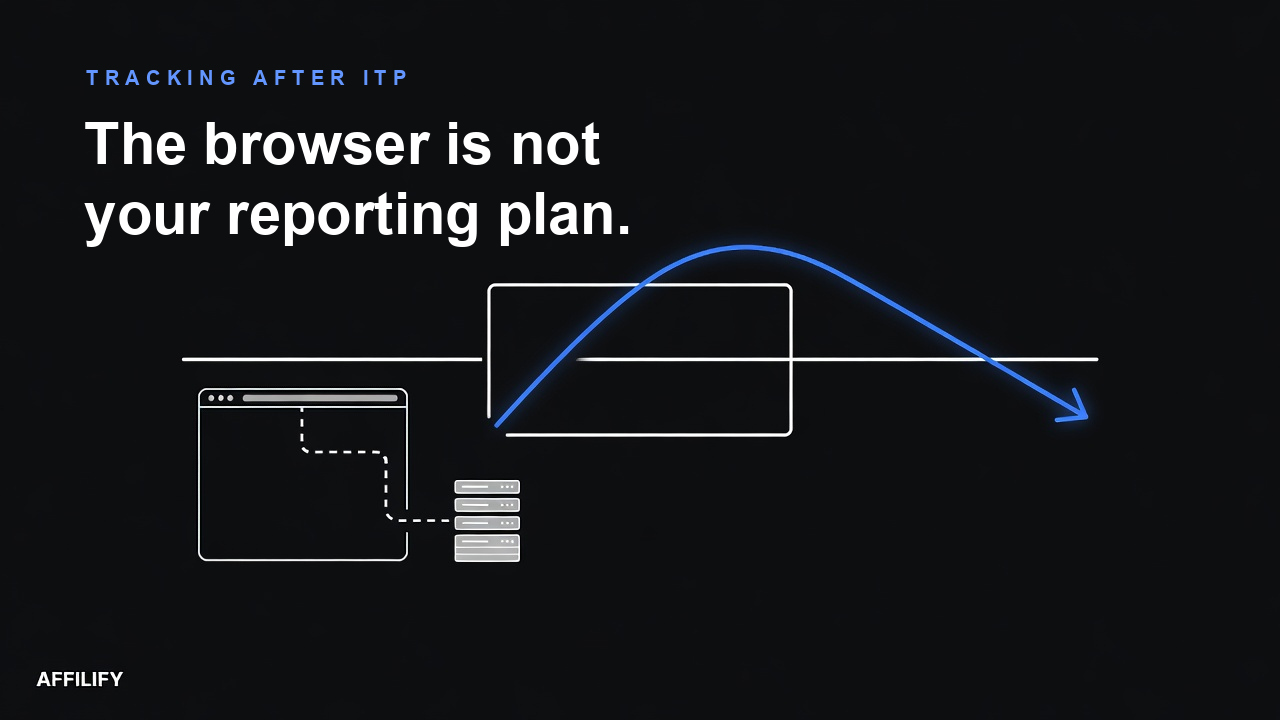
S2S Attribution after ITP: Why Postbacks Beat Pixels
Safari shortened the cookie's life years ago, and ad blockers finished the job. A pixel that fires in the browser is now a maybe. Server-to-server postbacks are how iGaming still counts an FTD.
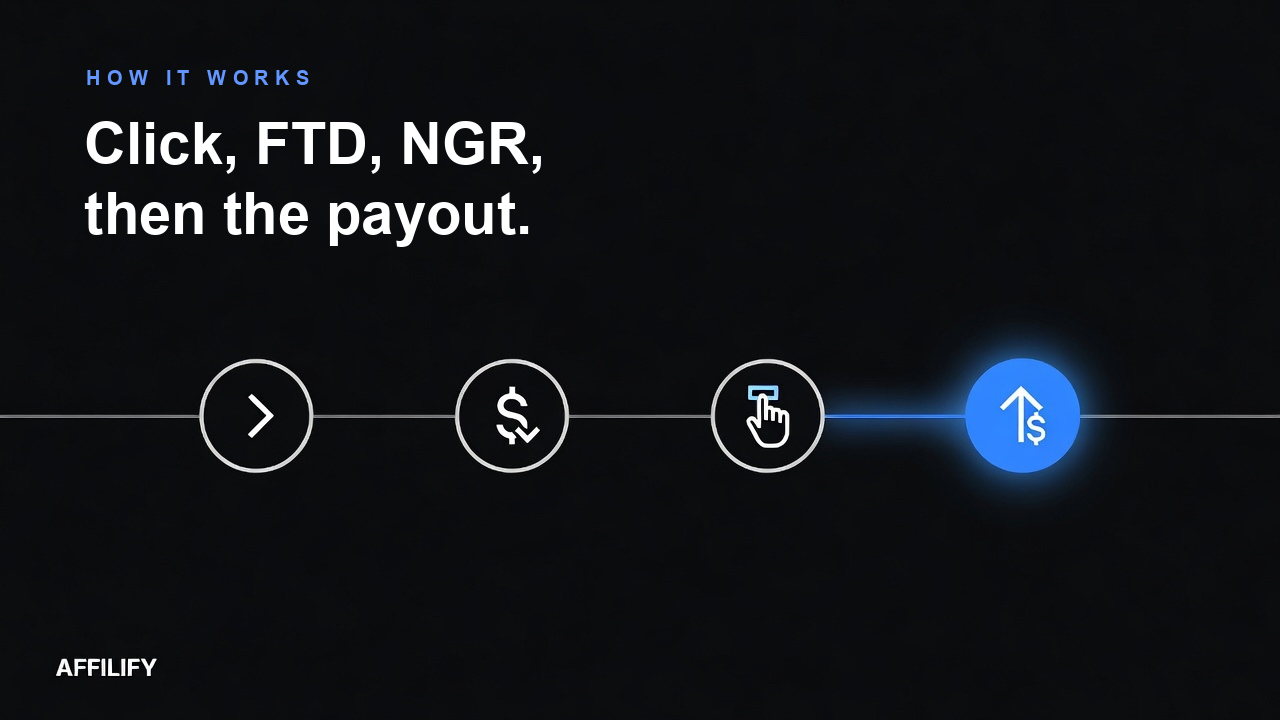
How AFFILIFY Works: Click, FTD, NGR, Payout
One path, in the order the money actually moves. You pick a brand, a player clicks, the operator reports the deposit, commission is calculated, it sits pending, and on the 15th it becomes available. Here is each step, including the two states people dislike.
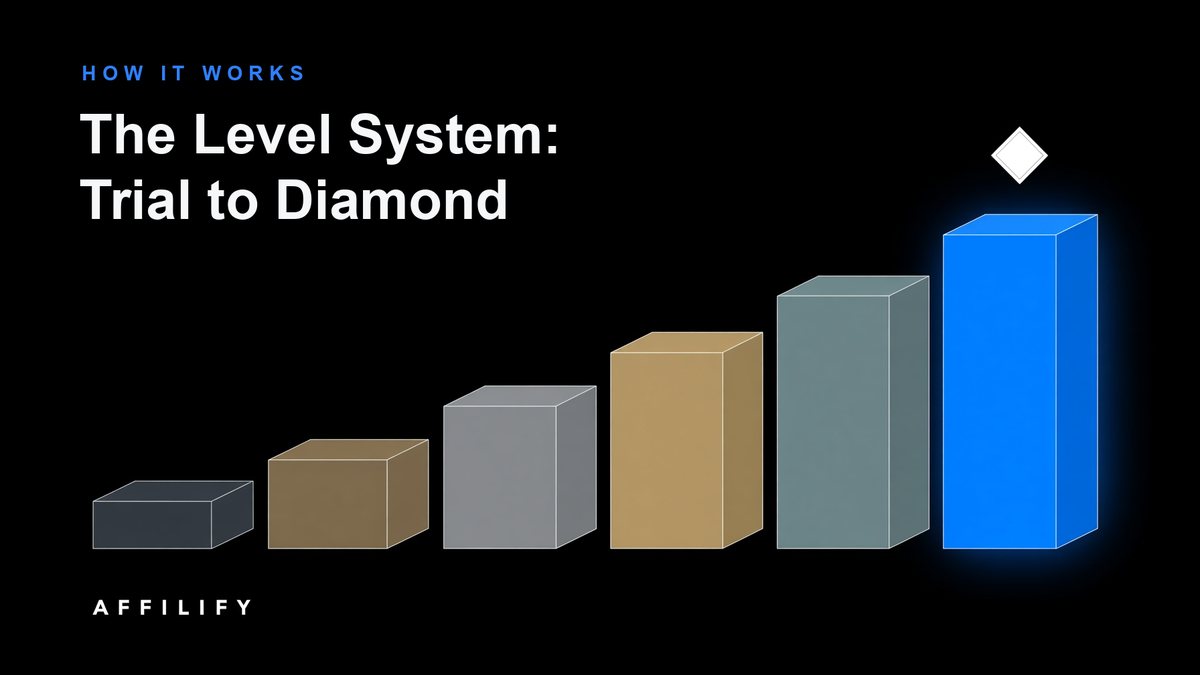
The AFFILIFY Level System: Trial to Diamond, in the Open
Most networks negotiate rates in the dark. AFFILIFY publishes the whole ladder — every tier, every rate, every rule for climbing. This is how it works, end to end.