The Sportsbook Playbook for Affiliates Who Learned on Casino
A bettor arrives with an opinion and a deadline; a casino player arrives with a mood. That single difference rewrites your publishing rhythm, your cashflow, your traffic channels and the way your CPA qualifies. Here is the whole map.
Odds pages expire in days, the fixture calendar decides your cashflow more than your effort does, and sportsbook CPA qualification is tighter than anything casino prepared you for. Price every campaign against the settled qualifying bet, not the deposit. Start with one league, one market type and one brand.
What changes when the player has a deadline
Someone who opens a slots lobby at eleven at night wants a feeling. No fixture, no deadline, no argument to settle. They read a review, take the bonus, and play whenever it suits them, which is why a casino review page can sit still for two years and keep paying.
Betting runs the other way. The bettor already believes Leverkusen are overpriced at 2.40, is not deciding whether to bet but only where, and wants it done before kickoff. Ninety minutes later the market that mattered no longer exists.
Everything downstream comes out of that. Your content inherits the deadline. Your traffic arrives in spikes shaped like a fixture list instead of drifting evenly through the week. Your conversion rate hangs on whether the cashier can take a deposit in ninety seconds while the price is still up. And your real competitor is not another review site, it is the odds comparison tab already open in the next window.
If your instincts were trained on casino, the two verticals diverge in more places than the label suggests. What follows is the rest of the map.
Odds are the only content in this business with an expiry date
A casino review ages like furniture. Write a good one about a brand that stays licensed and it can rank for three years on a bonus-terms refresh twice a year. That is the economic logic of casino affiliation: pay the content cost once, collect for a long time.
Odds do not work like that. "Arsenal Spurs odds" is searched hard for a few days around kickoff and then goes flat until the reverse fixture. Same for line movement posts, injury reactions, and every best-price-on-the-draw comparison you will publish. Shelf life in days, not years.
So you stop planning a content calendar and start reading a fixture list, which already tells you what people will search and roughly when, sometimes eleven months ahead. Publishing becomes a rhythm: previews Thursday, prices Friday, live Saturday, cold by Sunday night.
Be honest about whether you want that trade. You give up compounding. In return you get low competition per page (nobody has spent four years building links to one Tuesday night fixture) and demand you can forecast instead of guess. If you like waking up to a machine you built once, stay in casino. If you can publish on a schedule and would rather not wait nine months to learn whether a page ranks, sport suits you better.
The affiliates who last run both layers. An evergreen spine that never expires (bookmaker reviews, how bet builders settle, what each market type actually means) with the perishable stuff on top. The spine earns the links. The perishable layer catches the intent.
The calendar pays you, and it does not care how hard you worked
European football runs August to May, the NFL September to early February, the Six Nations owns February and March, and the Champions League final lands at the end of May or the start of June. Then it stops. In a year with no World Cup and no Euros, June and July in Europe are genuinely thin: pre-season friendlies nobody prices seriously, a tennis fortnight, cricket if your GEO cares about cricket.
Two quiet months are survivable if you saw them coming. They are a crisis if you spent May scaling paid traffic on the assumption that June looks like May.
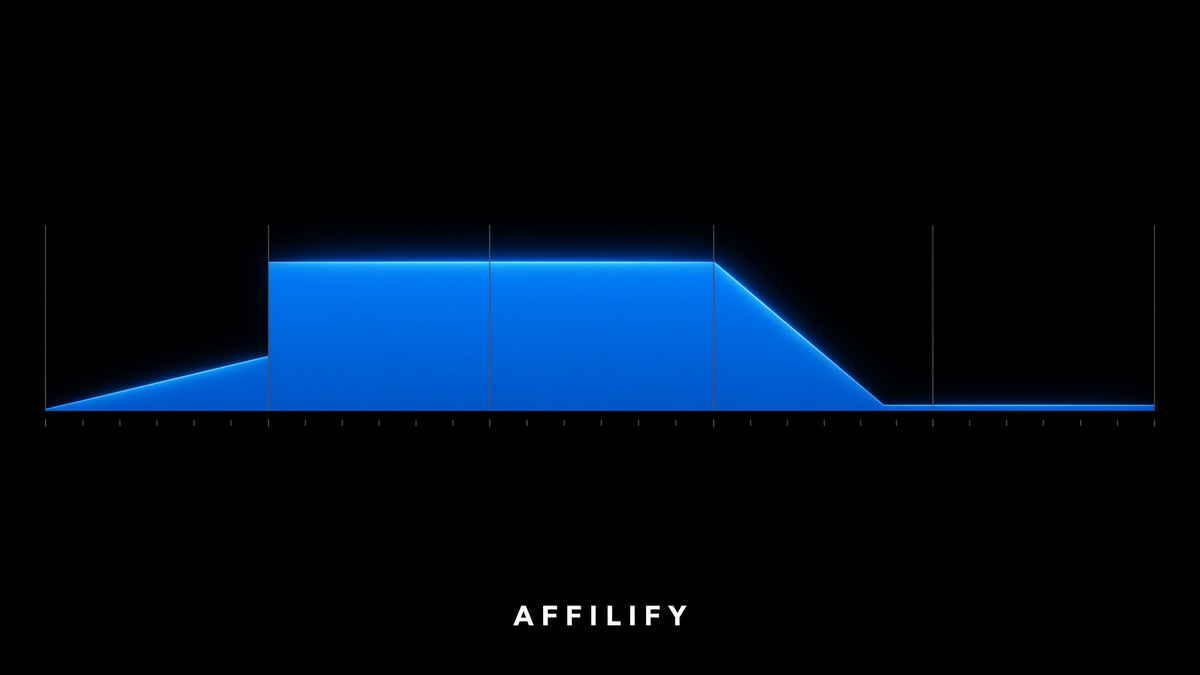
RevShare cushions this. The players you referred in October are still there in June, still generating a little NGR through Wimbledon. Pure CPA cushions nothing: no fixtures means no new depositors, which means no income. A book that is only sportsbook, only Europe and only CPA has a structural summer problem, and every fix for it is deliberate. A counter-seasonal sport or GEO. A casino brand for the dead weeks. Or enough RevShare that the off-season is a dip rather than a hole.
The formats, and what each one does to the operator's margin
Bet types are not product variety. They are margin tiers, and margin decides what a brand can afford to pay you.
A single on a big-league match winner carries very little for the book: three-way overround on a major football fixture is often in the four to six percent range, and a tennis or basketball two-way can be tighter still. That number is not unusually thin by casino standards. What is different is how often it gets applied. A slots player can put several hundred wagers through a reel in an hour. A bettor resolves a handful in a week, so the same percentage compounds into far less revenue per customer, and that gap, not the margin itself, is what sets the price of your traffic.
Stack legs into an accumulator and the margin on each leg compounds, so a four-leg acca holds several times what four separate singles would. That is arithmetic, not conspiracy, and it explains most of what sits in the promotions tab.
| Format | Where the operator's margin comes from | What that means for your deal |
|---|---|---|
| Single, prematch | Thin per bet. Often four to six percent overround on a major three-way football market | Highest volume, lowest value per bet. Usually the designated qualifying bet type |
| Accumulator or parlay | Margin compounds with every leg added | The format brands push hardest. Most bonus and free bet offers attach here |
| Bet builder | Correlated legs, priced with extra margin on top of the compounding | Fast growing, heavily promoted, a strong content angle because the rules confuse people |
| In-play | Wider prices and far more settled bets per session | Mobile and app driven. Rewards traffic that is already on a phone at kickoff |
| Cash-out | The operator books a spread when it buys the bet back | A retention tool, not a bonus. Frequently voids a bet's qualifying status |
Read the right-hand column as a shopping list. Accumulator and bet builder content is content the brand's own marketing budget already wants to exist, which is why those pages attract creative support and exclusive offers. Content about singles is worthy and converts poorly.
What a sportsbook deal actually pays, and where new affiliates lose money
Sportsbook CPAs usually sit below casino CPAs in the same GEO. A sportsbook player generates NGR more slowly than a slots player, so expected lifetime value is lower and the acquisition price follows it down. RevShare on sport is flatter than casino RevShare and swings harder with results, which is the opposite of what most people expect.
The qualification is also tighter, and this is the part that costs people real money. A casino affiliate reads "CPA per FTD" and assumes the deposit is the finish line. On a sportsbook deal it usually is not:
- A minimum stake, often around 10 USD or the operator's local equivalent, sometimes required as a single bet rather than split across several.
- Minimum odds. 1.50 decimal is the common floor, which is 1/2 fractional or -200 American. Bets at shorter prices simply do not count.
- Settled, not placed. A postponed match, a void market or an abandoned game means no qualifying bet happened. Cashing out early often voids it too.
- A window, commonly seven or thirty days from registration. Deposit in week one, bet in week six, no CPA.
- Market and product exclusions. Some deals exclude in-play, some exclude free bet stakes, some require the stake to come from the sportsbook wallet rather than a casino balance.
The failure mode is a counting mismatch. Your statistics show a first-time deposit, because one genuinely happened. The deal pays on a settled qualifying bet, a later and rarer event. Nobody is shaving you. You measured the wrong milestone, and the gap is entirely predictable once the terms have been read. Get the qualifier in writing before you send a click, and price the campaign against the qualifying event rather than the deposit.
Which commission model to take is still a real argument, and it carries over from casino with one twist: betting NGR is volatile in a way slots NGR is not. Slots converge on their published RTP within a shift. A weekend where every favourite wins can push a brand's monthly NGR negative, and if your deal carries deficits forward, that weekend is yours too.
On AFFILIFY, sportsbook rates sit in the deal per brand rather than as one platform number, and they differ by GEO. Deals are denominated in USD even where the operator quotes its bonus terms in the player's currency. Earnings still clear on the 15th like everything else, and can still sit under review while a deposit is verified. Sport gets no faster lane.
The free bet problem
Free bets convert better than almost anything else in the vertical. A matched free bet worth 25 to 30 in the local currency is concrete, comparable and the easiest offer in betting to explain in a headline.
Then it qualifies badly.
The mechanics are unglamorous. A free bet stake is usually not returned with the winnings, and it is usually excluded from qualifying bet criteria, so the player who came for it often has to place a second, real-money bet before your CPA triggers. Risk-free offers are less clear-cut. The first bet is real money and normally does qualify. The refund arrives as a free bet, so the second round stakes nothing that counts, and a player who loses twice looks busier in your reporting than in the deal.
Nobody is hiding this. It is a mismatch between what the offer optimises for (registrations) and what your deal pays for (settled qualifying bets). Treat every free bet campaign as a two-step funnel and measure both steps. If a free bet offer registers well but qualifies at half the rate of the brand's deposit-match offer, promote the deposit match even though the free bet gets more clicks.
Start with one league, one market, one brand
Traffic sorts differently here. Sport opens channels casino cannot touch: a Telegram or Discord room that goes loud on matchday, a YouTube preview slot, a fixture-driven newsletter. They work because sport has a shared, scheduled event to gather around. Casino has no equivalent moment, so it leans on evergreen comparison search and streamers instead. The reverse costs you something real, because sport gets almost nothing from the deep review traffic that carries casino affiliates through a slow quarter.
The way people fail here is almost always the same. They launch in August covering the Premier League and the Bundesliga and the NFL and tennis, across six brands, and by October they have thirty thin pages and no idea which one works. Pick one league you actually watch, because you will write about it weekly for nine months and faking that is exhausting. One market type, so your content is comparable to itself. One brand, so a conversion means something.
If you are unsure which league, choose by where you can reach people in their own language rather than by headline payout. A mid-size league you understand beats a huge one where forty better-funded affiliates arrived in 2019.
Next: how to read an iGaming offer and which commission model fits your traffic.
Frequently asked questions
Is sportsbook CPA lower than casino CPA?
Usually yes, in the same GEO. A sportsbook player generates NGR more slowly than a slots player, because a handful of wagers resolve in a week rather than a few hundred in an hour, so expected lifetime value is lower and the price an operator can justify follows it down. The compensation is repeatability: a bettor with a team has a reason to come back every matchweek, and sport reaches people who will never search for a slots review.
What exactly is a qualifying bet?
Whatever the deal defines it as, which is why it belongs in writing before you promote. The usual conditions: a minimum stake, a minimum price (1.50 decimal is the common floor), a bet that has actually settled rather than merely been placed, and a window from registration. Cash-out, void markets and free bet stakes commonly break qualification. Ask which apply, and assume the strictest reading of any answer that arrives in adjectives instead of numbers.
Do free bet signups count toward my commission?
The registration counts. The free bet stake usually does not count as a qualifying bet, so the player normally has to deposit and place a real-money bet before a CPA triggers. That is how a campaign shows excellent click-to-registration numbers and disappointing paid conversions at once. Measure the two steps separately or you will misread which offer earns.
Can I run sportsbook traffic profitably all year?
Not from one league in one country. European football alone leaves two very quiet months in a summer with no major tournament, and pure CPA turns quiet into zero. The workable answers: hold part of your book on RevShare so existing players pay through the gap, add a counter-seasonal sport or a GEO on a different calendar, or keep one casino brand for the dead weeks. Plan it in March, not in June.
More from this cluster

The Football Calendar for Sportsbook Affiliates
UCL nights, league run-ins, Copa América, World Cup years: football does not pay you evenly. A working calendar for when to publish, when to buy, and when to sit on your hands.
Prematch vs In-Play Conversion: Which Landing, When
A prematch click has hours and a comparison tab open. An in-play click has seconds and a price that is already moving. Sending both to the same landing is how sportsbook affiliates buy traffic that looks fine in the report and produces no qualifying bets.
Local Sports That Convert: The One They Already Argue About
Football is the world's biggest sport, and in several large betting markets it is not the one people follow closely enough to stake on. A market-by-market map of the sports that carry each country, when their seasons run, where the law actually lets you promote a book, and why translation is not localization.