Live Dealer in the Player's Language
A translated lobby is not a localised live casino. What converts is a dealer speaking the player's language, on a shift, at the hour your traffic actually arrives. How to tell the difference before you spend the click.
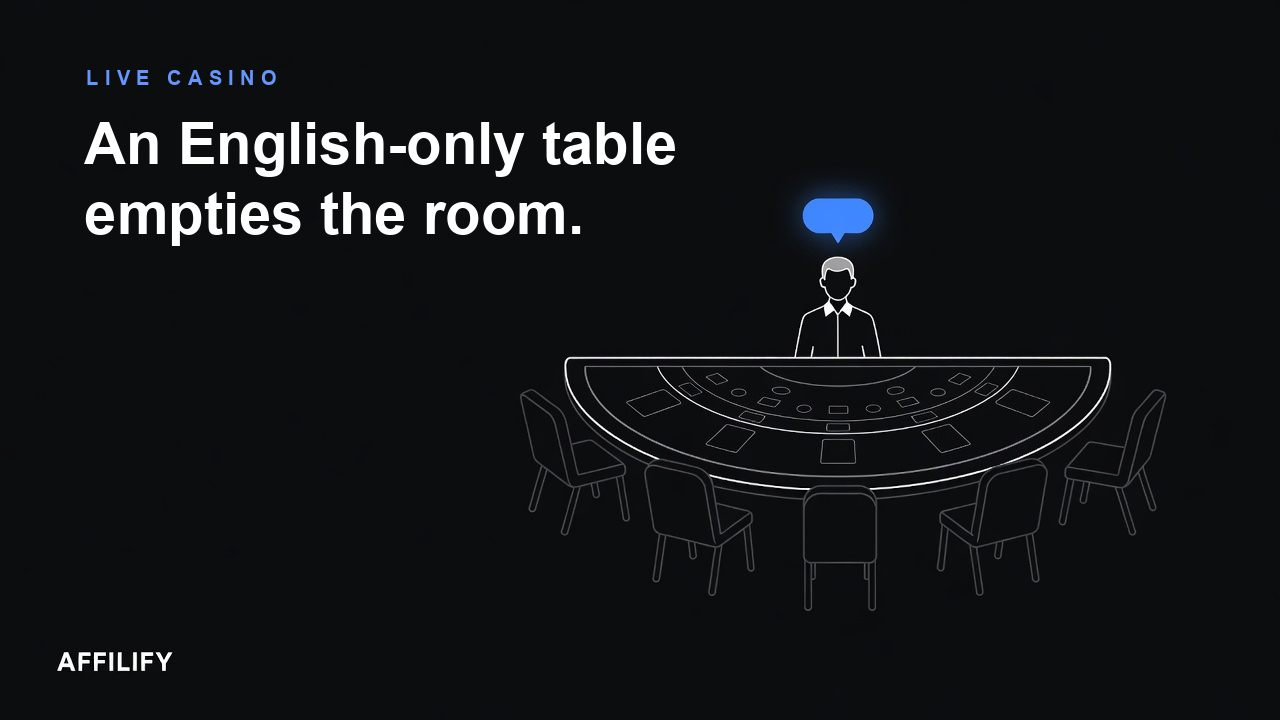
You can translate a live casino for the price of a translator. You cannot translate the dealer. That gap kills more live campaigns than any bonus ever has, and nothing in your reporting will tell you it happened.
Slots do not need a language. A reel spins the same in Manila and in Porto, and the cashier does the rest. Live casino has a person in it, and a person has to say something first.
Here is the failure nobody logs. The player lands, opens live, sees a wall of tables, clicks one. A dealer greets them in English. The bet timer starts. They are still reading the greeting when it ends.
They close the tab.
Nothing in your numbers says why. The click arrived, the registration did not, the page loaded fine, the cashier was never reached. You will spend a week testing headlines on a problem that lives three screens deeper. Slots vs live casino vs tables is the wider fork. This is the half of it that breaks on one word.
Only one layer costs a salary
Localisation in live casino lands in four layers, and a brand can do three of them with a spreadsheet.
The lobby is table names, categories, filters, limits, the search box. Translation work, done once. It goes first because it is cheapest.
The furniture is chips in the local currency, minimums in a number the player recognises without arithmetic, side bets named the way they are named at home rather than translated literally by somebody who has never played. Still cheap. Still not a person.
Everything after the table is the cashier, the support chat, the terms, the withdrawal form. A player who sat comfortably at a Turkish table for an hour and then hits an English KYC page has just been told what the brand thinks of them.
Then there is the dealer. A human being, on a shift, paid to speak that language all day and to read the chat in it. Studios hire for it, roster it and drop it when the numbers stop justifying it. This is the layer that converts, it is the layer brands quietly skip, and it is the only one of the four you cannot fake in a screenshot. So when somebody asks whether a brand is "localised for BR", the useful question is narrower. Are there Portuguese-speaking dealers, and at what hours.
Three grades, and the middle one fools everyone
| Grade | What the player gets | What it does to your GEO |
|---|---|---|
| Native tables | Dealer, chat and lobby in the language, on a real shift | Live is a campaign you can actually run |
| Translated lobby | Local words on the tiles, English dealer behind them | Registrations happen, live sessions do not |
| Nothing | English studio, English chat, converted currency | Send slots and stop pretending |
The middle grade is where most affiliate disappointment lives. Everything you can see from outside looks right. The brand passes a landing page review, the bonus reads well, the manager is enthusiastic. Then the player sits down and hears London.
Portuguese has real depth now, because Brazil paid for it. Spanish splits between Latin American and Iberian studios, and players hear which one they got faster than affiliates expect. Smaller European languages come and go with the studio contract, and that is the part affiliates keep getting wrong: a language is not a property of a brand. It is a room somebody is renting. Nordic markets often run happily in English, which is a real exception and not a rule you can carry to Bucharest.
When a studio does open a language, roulette usually comes first and blackjack second, while the rest of the floor stays English for a while. So a GEO can have live and still not have the game your creative is selling.
Hindi tables exist. India is not an open acquisition market for real-money gaming, so a Hindi table is a curiosity, not a plan.
The hour is half of the language
A native table is a shift, not a feature. It opens, it runs, it closes, and outside those hours the lobby falls back to the English studio with the same game name on the tile. The player who arrives at 03:00 does not know they got the night version. They only know the room felt wrong.
This is why a campaign converts on Tuesday evening and dies on Sunday morning with identical creative, identical GEO and identical landing. The traffic did not change. The room did.
So the schedule is part of the targeting. If your source delivers at two in the morning local time, either the brand runs an overnight shift in that language or you are buying English-table traffic and paying Portuguese-table prices for it. Ask the manager. Studio hours are the one localisation fact most of them are proud of, and the silence where there is no answer is also an answer.
Check the room yourself, before the click
Open the brand's live section from the GEO, on a phone, with the site set to the local language. Then work through it like a player, not like a reviewer.
- Count the tables with a dealer speaking the language. Not the tables with a translated title.
- Sit at one for a minute without betting. Listen to the greeting, then read the chat and see whether anybody is answering it.
- The chips. Local currency, or a number the player converts in their head before every hand?
- Load the same lobby at the hour your traffic actually arrives, not at your lunchtime.
- Which studio supplies the language? A brand that cannot name it does not run the room, and cannot promise you it will still be there in March.
If the brand's own material is a bonus percentage and a dealer stock photo, you have a slots offer with a live picture on it. How to read an iGaming offer is the longer version of that check.
What it does to the deal and to the page
Live NGR is lumpy. The regular who sits at a language table for a quarter is most of the business, and CPA pays you the same for him as for the tourist who played four hands and left. That argument lives on the CPA, RevShare and hybrid page. It does not change here.
What does change here is shelf life. You are pricing a deal against a room the brand rents from a studio and can hand back. Build an entire Portuguese live site on one brand's tables and you have taken a position on somebody else's contract. Two brands in the language, or a second product in the same GEO, is not hedging. It is knowing what you own.
On AFFILIFY the rate is set per brand and per GEO, in USD. There is no live switch at platform level. If a brand wants live traffic in a particular language, that shows up in the brand's own terms and in the landings you are given, not in a setting you can flip.
On the page, one language per landing. A Portuguese live landing that also lists the German tables is a general casino page wearing a dealer photo. Keep the creative honest too: if your thumbnail shows a dealer who plainly does not work at that studio, the first real table is a small betrayal. Tag the variants separately so you can see which room produced the deposit. Sub-ids.
The brand speaks first
Live casino is the only casino product where the operator has to open the conversation. Slots wait to be clicked. A sportsbook prints odds and says nothing at all. A live table greets you, and that greeting is either in your language or it is a short, polite reminder that this place was built for somebody else.
Affiliates who take that seriously stop selling live as casino with a camera on it. They sell a room, in a language, at an hour. The GEOs that looked dead were mostly never dead. Nobody in them was being spoken to.
Frequently asked questions
How do I find out whether a brand has native-speaking tables?
Open the live lobby from the GEO, in the local language, and count dealers rather than translated tile names. Then ask the manager which studio supplies the language and which hours it runs. A brand with real native tables answers both in one message. It is the thing they spent money on.
A translated lobby is still better than nothing, right?
For registrations, yes. For live sessions, barely. The lobby gets the player to the table and then hands them an English dealer, so the session ends before it starts. Treat that brand as a slots offer with live games available, and spend the live budget somewhere it has a dealer.
Is live worth running in a small language at all?
Often, and for the opposite reason to a big one. Small-language tables are rare, so the players who find one stop shopping around. The volume will never look impressive next to a slots campaign. What matters more is how long the room stays open: a studio that opened Greek or Romanian tables because one brand paid for a trial can close them again in a quarter, and you will have built a campaign on somebody else's renewal date.
My English-dealer brand converts fine in this GEO. Why?
Some markets genuinely play in English, the Nordics being the usual case. Some of your traffic may be expatriates or bilingual players who never noticed the dealer. Before you generalise, look at who is actually depositing and where they sit. Stockholm does not transfer to Ankara. Assuming it does is how a workable GEO gets written off after one bad test.
More from this cluster
Slots vs Live Casino vs Tables: What Converts
A slots player, a live-dealer player and a tables player do not arrive the same way, stay the same way, or pay you the same way. How the three products differ by GEO, by device, and in the deal you should take.
The State of iGaming Affiliate Acquisition in 2026
The player who deposits is the same player. The path that produced the FTD is not. A map of where first-time deposits actually come from now, which channels quietly closed, and what that does to the way you pick a GEO, a brand and a deal.
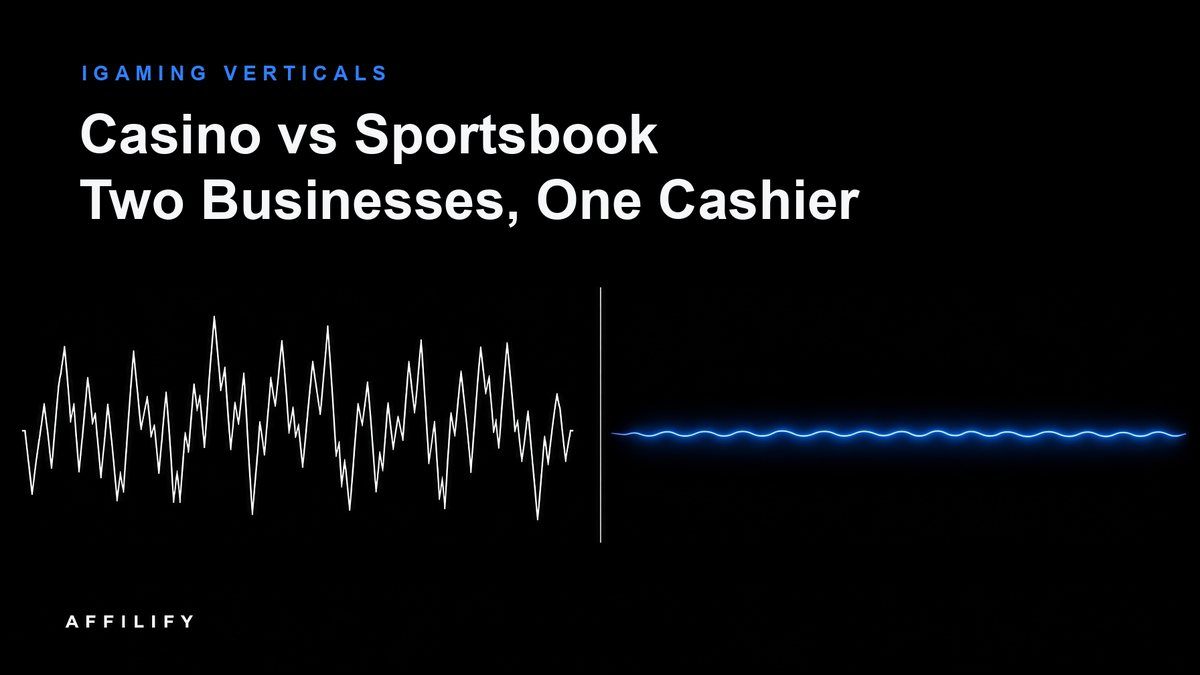
Casino vs Sportsbook Traffic: Two Businesses That Share a Cashier
Same brand, same back office, two completely different businesses to send traffic to. Seasonality you can read a year out, deposits sized differently, deal shapes that do not transfer, and the pricing question almost nobody asks before signing.