Why Affiliate Applications Get Rejected
Sources, GEO, history, paperwork. Four fields do almost all of the declining, and they are checked against a list before anyone opens your site. What each one is really asking, and how to answer so there is nothing left to reject.
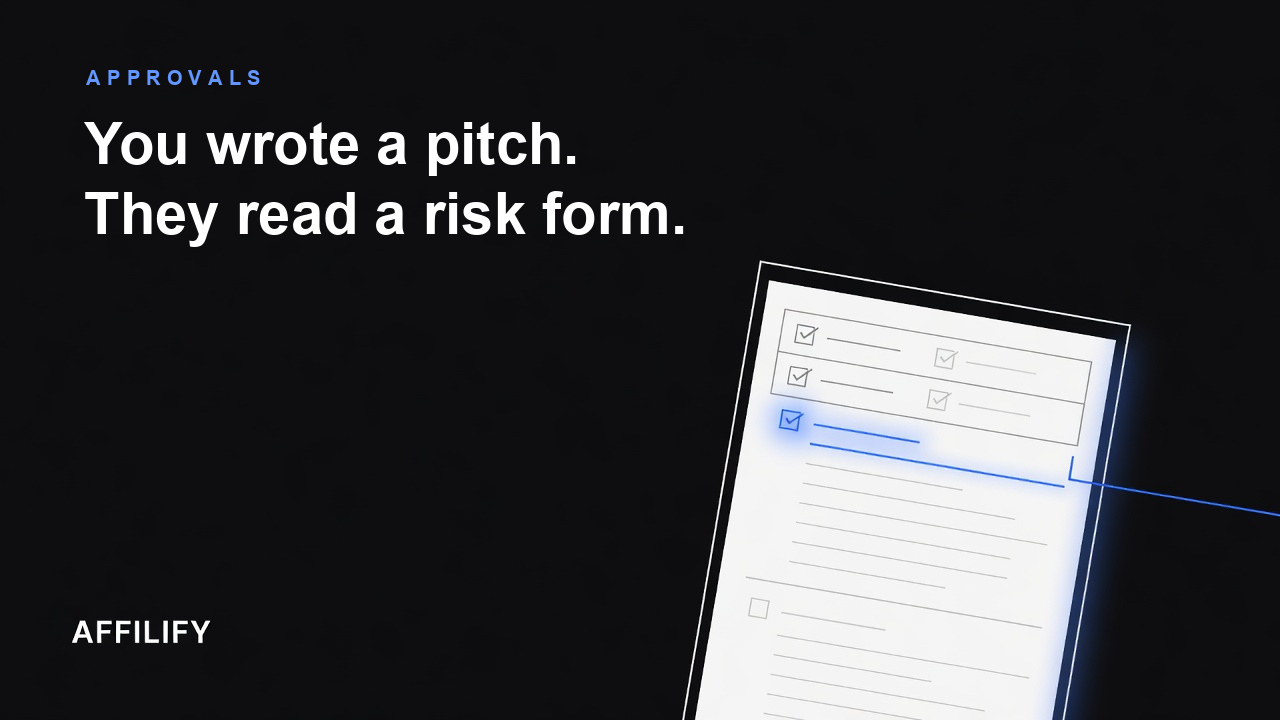
You wrote the application as a pitch. It was read as an underwriting form. Nobody was deciding whether you are good at this: they were checking four answers against a list, and one of yours did not clear.
That reframe changes what you write. You are not selling. You are removing reasons to say no, and a reviewer who cannot check an answer treats it as a reason.
The person reading it is not neutral either. Affiliate managers are measured on the quality of the accounts they open, not the count. Approving someone who turns out to run a banned source lands on their desk twice: once when it is caught, once when the revenue is clawed back. So they decline in your direction by default, and your job on the form is to make that the harder option.
The sources you named
This is the one you do to yourself.
Every programme keeps a list of sources it will not pay for. Incentivised traffic, adult placements, bidding on the brand's own trademark, some app-install networks, particular social formats in particular markets. None of it is secret. It sits in the terms you accepted, and restricted traffic sources covers the ones that turn up at almost every brand.
There are two ways to lose this field, and only one of them is obvious.
Naming a banned source is the obvious one. An application that opens with "incentive traffic and push" is finished before the next box. Nothing personal: the compliance cost of that traffic is higher than the revenue it brings, and they did that arithmetic years ago.
The other way is naming nothing. "SEO, social, email, PPC" describes half the internet and commits to none of it. A reviewer reads that one of two ways: a beginner who has not run anything yet, or someone leaving the door open so a banned source can be slipped in later. Neither gets approved, and the second reading is the one that sticks.
What works is specific and dull. One or two sources, named the way the industry names them, with a URL or a handle attached. "Organic search on a Polish slot-review site that has been live four years, plus one Telegram channel" is an answer, because it can be opened in another tab. That is the whole bar. An answer somebody can open.
If you run one source today and plan two more next quarter, write the one. Approval on a small true answer beats a rejection on an impressive one.
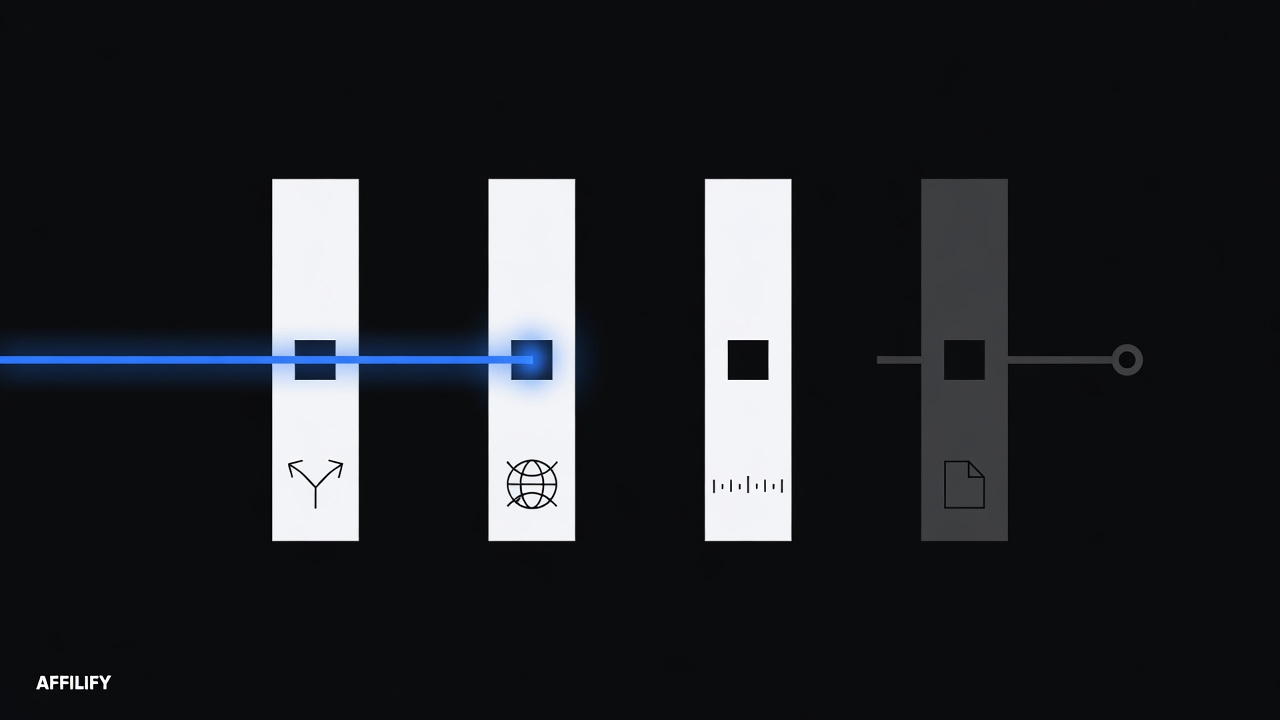
The GEO you asked for
No brand can take every country, and enthusiasm has never moved a licence.
A point-of-consumption licence decides which residents an operator may accept. Asking to send Germany to an offshore book, or Brazil to a brand that never went through the local process, is asking a stranger to break their own licence for you. Run where affiliates can send iGaming traffic before the form, not after the reply.
Then there is the quieter no. The GEO is open, the licence is fine, and the brand declines anyway because it has nothing to convert with there: no local payment rail on the cashier, no local language, no sport anyone in that country follows. That one says nothing about your traffic. The product does not exist yet in your market, and you would have found out by burning a month of clicks.
The worst version of this field is the one that ticks every GEO in the list. It reads as no GEO at all. Pick the one you can actually fill.
The history behind the account
"No history" covers three different situations, and brands treat them differently.
A blank application, with no site, no channel, no list and no example of work, is not an automatic decline. Some brands take it and put you on a starter deal. Most do not, because there is nothing to check. If you work without a site, say what you do have and where it lives: affiliate work without a website is a real path, and it gets declined mostly because application forms describe it badly.
A domain registered on Tuesday is a different case. Templated top-ten page, no traffic yet, no age on anything. Nothing there is a reason to approve, and none of it is a reason to think badly of you. It is a reason to wait, and waiting is what the rejection means. Come back when the page has been live through a season.
Then there is the account you already had. Programmes remember. Returning under a new name after a closure is a far weaker position than one honest line about what happened. Account history is checked, and we do not publish the checklist. Assume the question was asked before you answered it.
New is not the problem. New and vague is.
The paperwork you left half finished
The quietest of the four, because it often does not arrive as a rejection at all. The application sits. Nobody replies. Something in the profile is incomplete, and the file cannot move to the person who signs it off.
The usual versions: a payout section left blank, a company name that does not match the account it would pay, an expired identity document, a KYC flow abandoned at the photo step. KYC for affiliates explains why that gate exists at all. For applications, the short version is that an unfinished profile looks exactly like an abandoned one.
This part is changing. More programmes now approve quickly and put the real gate at the payout instead, which means approval has stopped being the finish line. You can be approved, send traffic, earn, and still not be paid, because the questions you skipped at signup are waiting at the withdrawal.
AFFILIFY is built that way on purpose. One signup reaches every brand, so there is no stack of forms to abandon. The questions do not disappear, they move. Trial accounts run RevShare only, at 25%. CPA needs a graduated account, and on many brands a completed KYC on top of it. Graduation is 10 qualifying deposits inside a rolling 90 days, nothing carries past the 90, and a human reviews every promotion before it takes effect. Same underwriting, spread across your first weeks instead of compressed into one form.
What a no is actually telling you
Ask which of the four it was. One line, no speech, no apology. Plenty of programmes will tell you, because a rejection that gets fixed costs them less than one that comes back five times.
| What failed | What the reviewer saw | The fix |
|---|---|---|
| Sources | A banned source, or four vague ones | One or two you actually run, with a link |
| GEO | A market the licence cannot take, or every box ticked | One GEO you can fill, checked against the brand's list |
| History | Nothing to look at, or a closed account in new clothes | Show the asset you have, or explain the old one |
| Paperwork | A profile that stops halfway | Finish it before the money matters |
Then change the answer, not the tone. A longer, warmer second application with the same four fields inside it gets the same result, slightly slower.
Reapply when something is genuinely different. Three months and the same site is not different. A GEO with real traffic behind it, a finished profile, a page that has been indexed through a full season: those are different.
Some rejections were never about you at all. Intake closed in your market. A GEO at capacity. A programme that quietly went to a private list last quarter and never updated the page. You cannot fix those, and you should stop trying by the second attempt.
So fill it in the way you would fill in an underwriting form, because that is what it is. One true answer per field. Nothing decorative, nothing you would have to explain later. The affiliates who get approved everywhere are rarely the most impressive on paper: they are the ones whose answers can be opened and checked.
Frequently asked questions
Can I apply again after a rejection?
Yes, and most programmes expect it. Wait until something on the form is genuinely different: a GEO you now have traffic in, a finished profile, a page that has been live a season. Reapplying the same week with the same four answers reads as someone who did not read the reply. One line about what changed does more than a longer application ever will.
Should I admit that I am new?
Yes. New is not a rejection reason at most brands. Vague is. Say what you run today, name the single GEO you are starting in, and leave the projections out. A reviewer who sees one small true answer can approve a starter deal and watch what happens next. A reviewer who suspects an invented portfolio has to assume the rest of the form is invented too.
Does a rejection at one brand follow me to the next?
Not automatically. Programmes are separate companies with separate lists, and a no from one says nothing to another. What does follow you is a closed account at the same programme, or a source that everybody bans for the same reason. On AFFILIFY one signup reaches every brand, so the gate you meet is the level ladder and KYC rather than a stack of forms.
How long should I wait before chasing an answer?
Give it a working week, then send one short message asking whether anything is missing from your profile. That question gets answered far more often than a bare request for an update, because it hands the reviewer something to do. If the silence survives a second ask, check your payout and identity sections before you write again.
More from this cluster
When to Ask for a Better Affiliate Deal
Volume, quality, exclusive: three reasons a brand might actually move. How to time the ask, what to put in writing, and the asks that get you ignored.
Sub-IDs for Split Testing: Ten Slots, Used Properly
A tracking link without sub-ids tells you that traffic arrived. A tracking link with sub-ids tells you which headline, which GEO split, which creator and which landing produced the FTD. Ten slots, what to put in each, and the mistakes that make the report unreadable.
Restricted Traffic Sources: What Closes an Account, and What Does Not
Three tiers of traffic source: generally accepted, needs written permission per brand, and never. Almost every lost deal happens in the middle tier, where somebody read silence as a yes. Brand bidding and incentivized traffic explained properly, plus what a reversal actually costs.